
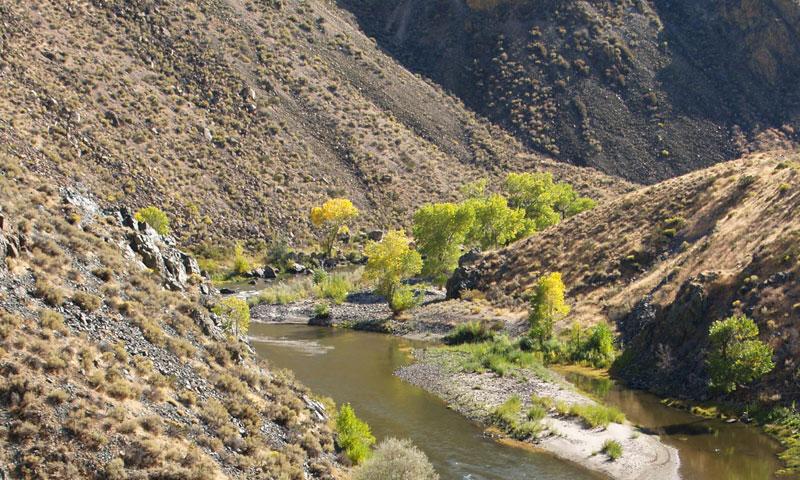
- Carson River flows from California into Nevada, offering a scenic place for outdoor recreation
- Follow Highway 89 from Lake Tahoe right to the put in point below Markleeville
- Fish for rainbows, cutthroats and browns
- Enjoy an easy hike on the East Fork Carson River Trail
- Relax at the Hot Springs
Overview
The picturesque Carson River Nevada and California holds much fascination for anglers, rafting enthusiasts and all outdoor lovers. Not far from Lake Tahoe, you can drive here for a day of river fun, including a dip in the hot springs.
Location & Information
Carson River NV access is on Highway 89, south of Markleeville, California. The put-in point is at Hangman’s Bridge.
The best time to enjoy the charms of the Carson River is spring through fall.
Contact information: 775-331-6444
Activities
Varied activities at the Carson River invite outdoor enthusiasts to come here to enjoy the Sierra Nevada Mountains in all their glory.
- Enjoy the Hot Springs
Just past the Hangman’s Bridge, you’ll discover two hot spring pools where you can soak. The East Carson River Hot Springs offers a nice place to relax when rafting or hiking the backcountry. - Fishing
Fish from the bridge to the Nevada state line to find rainbows in abundance, and you may also catch some cutthroat and browns. Fishing is open from the end of April to mid-November below Carson Falls. - Rafting
Find some wonderful Class I and II rapids along the Carson River. Put in at the Hangman’s Bridge and ride the river to Ruhenstroth Dam. This is a little over 20 miles of great fun for beginners. Expert rafters love the nearby hot springs and scenery, even if they don’t find the whitewater particularly challenging. - Hiking
Hike the East Fork Carson River Trail for 5 miles out and back for an easy trek through some scenic area. Primarily used by anglers to access great fly-fishing, it’s a wonderful trail to experience some of the Sierra’s lovely forest and rushing river sounds.
Fun Facts
The Carson River, named for the famous explorer, Kit Carson, is fed by the spring run-off from the melting snows in the high country. It was a main route for the Carson Trail, followed by the miners and settlers in Gold Rush Days.